
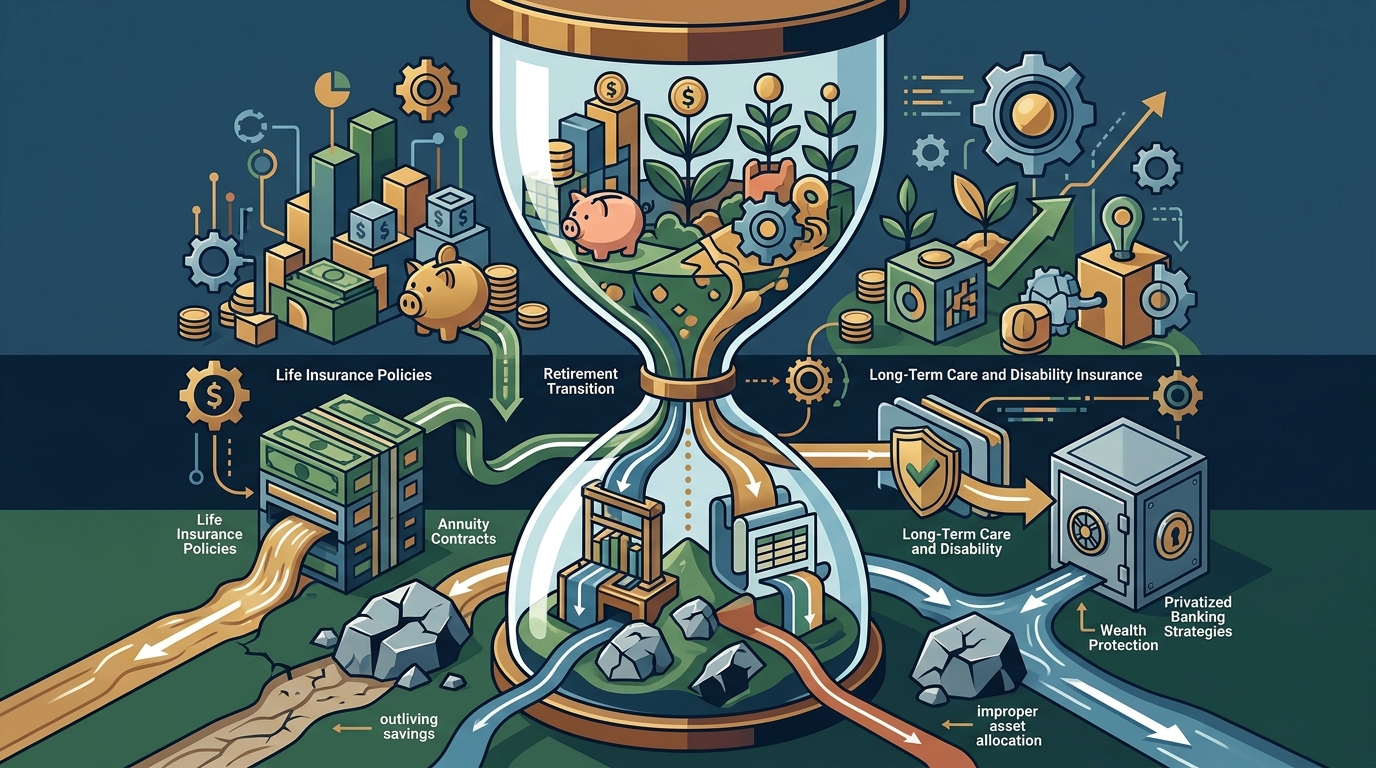
Retirement is often viewed as the finish line of a long professional career, yet for many, it marks the beginning of a complex financial transition. According to recent industry data, nearly 64% of Americans worry about outliving their savings, highlighting a critical gap in retirement preparation. This anxiety is not unfounded. The shift from accumulation to distribution requires a fundamentally different approach to money management. One misstep in this phase can erode decades of hard work. At Generational Wealth Concepts, we see families struggle with predictable income gaps and unexpected market volatility. The goal is not just to save, but to create a sustainable financial ecosystem that protects your lifestyle and legacy. (Contact Generational Wealth Concepts)
1. Underestimating Longevity and Inflation
One of the most pervasive errors in retirement planning is assuming a fixed timeline for your retirement years. Many individuals plan for a 20-year retirement, but with increasing life expectancy, a 30-year or longer horizon is more realistic. This miscalculation can lead to premature depletion of assets. Furthermore, inflation silently erodes purchasing power. A dollar today will not buy the same amount of goods in 20 years. Without strategies that offer growth potential or inflation protection, your retirement income may fall short of your actual needs.
To avoid this, you must model your retirement plan around a longer timeline. Incorporating assets that provide predictable income is essential. Fixed indexed annuities, for example, can offer growth potential linked to market indices while protecting your principal from direct market losses. This balance allows your money to work harder against inflation without exposing your core savings to unnecessary risk. We help clients evaluate these strategies to ensure they align with their specific longevity goals.
2. Ignoring Tax Efficiency in Withdrawals
Taxes are often the largest expense in retirement, yet they are frequently overlooked until it is too late. Many retirees withdraw money from taxable accounts first, leaving tax-advantaged accounts to grow. However, this strategy can lead to higher required minimum distributions (RMDs) later, pushing you into higher tax brackets. Additionally, Social Security benefits can become taxable if your provisional income exceeds certain thresholds. Ignoring these nuances can result in paying significantly more in taxes than necessary.
Strategic tax planning involves coordinating your withdrawals across different account types. Roth conversions, for instance, can be a powerful tool to manage future tax liabilities. By converting traditional IRA funds to Roth accounts during years of lower income, you can create a source of tax-free income in retirement. We coordinate with tax professionals to ensure your withdrawal strategy minimizes your overall tax burden and maximizes your net income.
3. Falling Victim to Market Timing Risks
Retirees are particularly vulnerable to sequence of returns risk. This occurs when poor market performance happens early in retirement, forcing you to sell assets at a loss to fund your lifestyle. This can permanently impair your portfolio's ability to recover. Trying to time the market is a common mistake, as it often leads to buying high and selling low. Emotional decision-making during market downturns can derail even the most well-laid financial plans.
The solution lies in creating a "bucket" strategy that separates your money based on time horizon and risk tolerance. Keep enough cash or cash-equivalents to cover 2-3 years of expenses, reducing the need to sell investments during a downturn. For longer-term growth, utilize fixed indexed annuities that offer principal protection. This approach ensures that your essential income needs are met regardless of market conditions, providing peace of mind and stability.
4. Overlooking Liquidity and Access to Capital
Many retirees tie up too much of their wealth in illiquid assets, such as real estate or long-term annuities, without considering their need for accessible cash. Life is unpredictable. Unexpected medical expenses, home repairs, or investment opportunities may require immediate access to funds. If your money is locked away or subject to surrender charges, you may face penalties or miss out on valuable opportunities. This lack of flexibility can create significant stress and financial strain.
Generational Wealth Concepts emphasizes the importance of liquidity in retirement planning. Through strategies like privatized banking using whole life insurance policies, you can gain access to policy cash value while maintaining long-term protection. This method allows you to borrow against your policy at competitive rates, keeping your money working for you and avoiding the need to liquidate other assets at inopportune times. It provides a private, flexible source of capital that complements your broader financial strategy.
5. Neglecting Legacy and Estate Planning
Retirement is not just about your income; it is also about what you leave behind. Many individuals focus solely on their own financial security and neglect the needs of their heirs. Without a clear estate plan, your assets may be subject to probate, which can be time-consuming and costly. Additionally, without proper planning, your beneficiaries may face significant tax burdens or mismanage the inheritance you worked hard to build.
Integrating life insurance into your estate plan can provide a tax-efficient way to pass on wealth. Permanent life insurance offers a death benefit that is generally income-tax-free to your beneficiaries. We help coordinate these strategies with your attorney and tax professional to ensure your legacy goals are met. By aligning your insurance and retirement strategies, you can create a comprehensive plan that protects your family's financial future.
Key Takeaways
- Longevity Risk is Real: Plan for a retirement that could last 30 years or more, not just 20.
- Tax Strategy Matters: Coordinate withdrawals and consider Roth conversions to minimize lifetime taxes.
- Protect Against Volatility: Use fixed indexed annuities to shield your principal from market downturns.
- Liquidity is Key: Maintain access to capital through strategies like privatized banking to avoid penalties.
- Legacy Planning: Use life insurance to provide a tax-efficient legacy for your heirs.
- Professional Coordination: Work with specialists to align your tax, legal, and financial plans.
- Personalized Approach: There is no one-size-fits-all solution; your plan must reflect your unique goals.
Frequently Asked Questions
What is the biggest mistake people make in retirement?
The biggest mistake is often underestimating how long their money needs to last. Many retirees plan for a shorter timeline than reality, leading to potential shortfalls later in life.
How can I protect my retirement income from inflation?
You can protect against inflation by including assets with growth potential, such as fixed indexed annuities, in your portfolio. These instruments offer the chance to grow your money while protecting your principal.
What is privatized banking in retirement?
Privatized banking involves using a whole life insurance policy as a private bank. You can borrow against the cash value for investments or expenses, allowing your money to continue growing tax-deferred.
Do I need life insurance if I am already retired?
Yes, life insurance can still be valuable for legacy planning, estate liquidity, and leaving a tax-free inheritance to your heirs. It can also provide additional liquidity options through cash value access.
How do I know if my current annuity is still a good fit?
We can review your existing annuity to determine if it still aligns with your current goals for income, protection, and legacy. Market conditions and personal circumstances change, so regular reviews are essential.
What is sequence of returns risk?
Sequence of returns risk refers to the danger of experiencing poor market performance early in retirement, which can force you to sell assets at a loss and impair your portfolio's long-term growth.
How can I reduce my tax burden in retirement?
You can reduce taxes by strategically withdrawing from different account types, utilizing Roth conversions, and coordinating with tax professionals to optimize your overall tax strategy.
Schedule Your Strategy Session
Retirement is a complex journey that requires careful planning and ongoing management. By avoiding these common mistakes and implementing a robust strategy, you can build confidence in your financial future. At Generational Wealth Concepts, we help individuals, families, and business owners create tailored plans for retirement income, protection, and legacy. Contact us today to schedule a free strategy session and take the first step toward a secure retirement.